
As food manufacturers continue to seek stable, efficient, and cost-effective mineral ingredients, granular magnesium oxide has become an increasingly important material in modern food processing. Compared with traditional powder products, granular magnesium oxide offers superior flowability, reduced dust generation, improved handling, and more consistent dosing performance.
Today, food magnesium oxide is widely used as a magnesium fortifier, acidity regulator, anti-caking agent, processing aid, and nutritional ingredient across numerous food and beverage applications. For purchasing managers and formulation specialists, understanding the applications of magnesium oxide, product specifications, and supplier qualifications is essential for making informed sourcing decisions.
Competitive Analysis of Existing Industry Content
After reviewing several leading English-language resources discussing food-grade magnesium oxide and its applications, several common themes emerge:
Frequently Covered Topics
Most articles focus on:
- Magnesium supplementation
- Anti-caking properties
- pH adjustment
- Regulatory approval as E530
- Basic chemical characteristics
Magnesium oxide is recognized as a food additive and is permitted for use as an acidity regulator and anti-caking agent in various food categories under applicable regulations and good manufacturing practices.
Content Gaps
However, most competing articles fail to discuss:
- Advantages of granular magnesium oxide versus powder
- Particle size control
- Flowability considerations
- Bulk handling and automated feeding systems
- Supplier qualification standards
- Manufacturing process control
- Food safety certifications
- Procurement risk management
These omissions create an opportunity to provide more value for procurement professionals and food formulators.
Content Optimization Strategy
To outperform existing content, this article focuses on:
- Technical advantages of granular magnesium oxide.
- Practical food industry applications.
- Supplier evaluation criteria.
- Manufacturing quality controls.
- Direct manufacturer sourcing advantages.
- Food safety and certification requirements.
What Is Granular Magnesium Oxide?
Granular magnesium oxide is produced through controlled calcination of high-purity magnesium compounds followed by granulation and particle-size classification.
Unlike conventional fine powders, granular products provide:
- Improved flow characteristics
- Reduced airborne dust
- Better storage stability
- Easier handling during production
- More accurate metering in automated systems
These characteristics make granular magnesium oxide particularly attractive for large-scale food manufacturing operations.
Depending on customer requirements, particle size distributions can be customized to suit blending, tableting, premix, or bulk handling applications.
Why Food Manufacturers Use Granular Magnesium Oxide
1. Magnesium Fortification
One of the most important applications of magnesium oxide is nutritional fortification.
Magnesium is an essential mineral involved in:
- Muscle function
- Nerve transmission
- Energy metabolism
- Bone health
- Enzyme activity
Because magnesium oxide contains a high percentage of elemental magnesium, it is frequently used in:
- Fortified cereals
- Nutritional powders
- Functional foods
- Meal replacement products
- Sports nutrition products
Compared with many other magnesium sources, food magnesium oxide offers excellent magnesium content and cost efficiency.
2. Dietary Supplements
Food-grade granular magnesium oxide is widely used in:
- Tablets
- Capsules
- Sachets
- Mineral premixes
Granular material often provides superior flowability during tablet manufacturing and encapsulation processes.
Benefits include:
- Uniform blending
- Consistent filling performance
- Reduced dust generation
- Improved production efficiency
For supplement manufacturers operating high-speed production lines, these advantages can significantly reduce operational challenges.
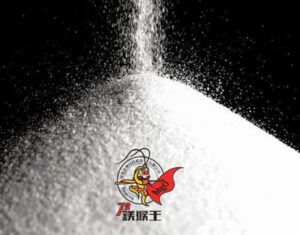
3. Anti-Caking Agent
Magnesium oxide is recognized as an effective anti-caking agent (E530).
Its moisture-absorbing properties help prevent clumping in powdered foods. Magnesium oxide is commonly used as an anti-caking agent and acidity regulator in food systems.
Applications include:
- Powdered beverages
- Seasoning blends
- Milk powders
- Nutritional powders
- Dry ingredient mixes
Granular magnesium oxide provides additional benefits because it generates less dust during blending and packaging operations.
4. Acidity Regulation
Another important application of magnesium oxide is pH control.
Because magnesium oxide is alkaline, it can help maintain desired acidity levels in food processing systems.
Benefits include:
- Improved product stability
- Better flavor consistency
- Enhanced processing control
- Extended shelf life in certain formulations
Food manufacturers often utilize magnesium oxide as a controlled alkaline source where pH management is critical.
5. Food Processing and Premix Manufacturing
Granular magnesium oxide is particularly valuable in large-scale premix production.
Its uniform particle size helps reduce segregation during:
- Transport
- Storage
- Mixing
- Packaging
This is especially important when producing:
- Vitamin premixes
- Mineral premixes
- Functional food ingredients
- Nutritional blends
Consistent particle distribution contributes to better dosage uniformity throughout the final product.
Advantages of Granular Magnesium Oxide Over Powder
| Property | Granular Magnesium Oxide | Powder Magnesium Oxide |
|---|---|---|
| Dust Generation | Low | Higher |
| Flowability | Excellent | Moderate |
| Handling Safety | Improved | More challenging |
| Automated Feeding | Easier | Can bridge or dust |
| Storage Stability | Better | Good |
| Segregation Resistance | Higher | Lower |
For modern food factories operating automated production systems, these advantages often justify selecting granular grades.
Conclusion
The applications of magnesium oxide in the food industry continue to expand as manufacturers seek efficient, reliable, and cost-effective mineral ingredients. From nutritional fortification and dietary supplements to anti-caking and pH regulation, granular magnesium oxide offers significant advantages over traditional powder grades.
For procurement professionals, selecting a qualified supplier requires careful evaluation of manufacturing capability, certifications, quality systems, and technical support.
By working directly with an experienced manufacturer such as Hebei Meishen Technology Co., Ltd., buyers can benefit from consistent quality, improved traceability, technical expertise, and long-term supply stability—key factors for successful food industry sourcing.